Toa Payoh
Shopping Mall

- All
- Toa Payoh Town


Toa Payoh Mall Heritage
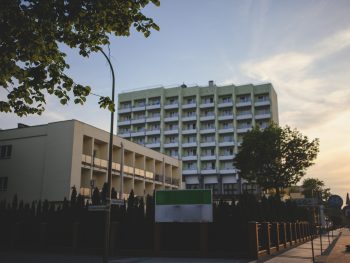
Toa Payoh Shopping Mall is a combination of both the Toa Payoh hub and the Toa Payoh Mall shop houses.
Shop houses have been around since the late 18th century, during the colonial era. It is normally two or three stories high. The ground floor will be a shop space for them to display their items for sale. The owners' residence would be above the shop. After the era, shop houses fell into disrepair and became abandoned. As you walk along the Toa Payoh HDB hub, there are plenty of shops selling daily necessities ranging from household items to fashion wear.
Beauty and slimming centres, as well as family clinics, are all in the district. Toa Payoh Shopping Mall is the first-ever online directory of neighbourhood shop houses. This directory aims to help shop houses in Toa Payoh Hub and Toa Payoh Mall raise awareness among the general public and Toa Payoh residents. We will be regularly updating on the latest promotions for the shops. Do check this website before heading down to the shops. It will definitely save you the trouble of walking around the estate to look for what you want.
Shop houses are also commonly found on the void decks of certain HDB blocks in Toa Payoh. As a resident of Toa Payoh, you must know some facts about your own residential area. Do you know that Toa Payoh is one of the most appealing public living residences in Singapore? It is one of the nearest residences to the city. Furthermore, Singapore’s prominent newspaper organisation, Singapore Press Holdings, is also located among the numerous industries in the district.
This shopping mall will help you discover something new about your own residential area! Do you know there are 20 industrial estates, 1 market & food centre, 13 supermarkets, 8 primary schools, 4 secondary schools, 4 kindergartens, and 1 polyclinic. As a resident, you need to be aware of these! Toa Payoh shop houses are situated at the centre of Toa Payoh. It is near the Toa Payoh Bus Interchange and the Toa Payoh Mass Rapid Transit Station (NS 19). It will be very convenient for the residents to drop by and have a look.
Additionally, it will also allow the general public to know more about Toa Payoh. Just a short walk from the shop's houses, you can find Toa Payoh Town Park. This park features facilities such as an open-concept washroom and a large marquee for activities or outings. With its antique garden shelters, users can now relax after a long day of work. Its vibrantly coloured paths will also help create a stress-free amble or run around the park.
Each of our primary park features is the viewing tower and the pond, both surrounded by trees. On top of its mesmerising scenery, residents can also head down to the nearest available cafes to enjoy their meal! You can bring your family down on a Sunday morning to enjoy the chef's delicious meal.
Toa Payoh Town Park is located at the junction of Toa Payoh Lor 2 and Toa Payoh Lor 6. Toa Payoh is an urban centre that was once an enormous and well-known homesteader region. It has been changing quite a bit, particularly at the contemporary industrial buildings at Toa Payoh Central. However, some landmarks still remain, like Toa Payoh Methodist Church, Toa Payoh Library, and Bethesda Bookstore, which hasn't changed its interior design over the years.
OUR HISTORY
In the past, Toa Payoh was actually a prominent town in Singapore. The word "Payoh" is derived from the Malay word "paya," meaning "swampland." Toa Payoh is also similar to the Chinese meaning of Paya Lebar, which means "huge swamp land." Toa Payoh was a large-scale, infamous homestead region.
Back in the late 1960s, Toa Payoh was well known as “the Chicago of Singapore” for its high crime rate. Life back then was simple and easy, but there was a lack of safety, security, and hygiene. Fights normally break out due to jostling in the queues for water, a daily chore for the people. Many homesteaders were involved in cultivation and fostering work.
Others were like hawkers' stall owners, factory employees, technicians, or domestic helpers.
The homesteader began relocating in 1962 due to rising land prices and another government incentive. The clearance process began, and the renovation started in early 1964.




- All
- Featured Post
- Food
- Fitness
- Japan